Key takeaways
- You set how many times one diner can use a deal, up to 20, and an optional wait between uses.
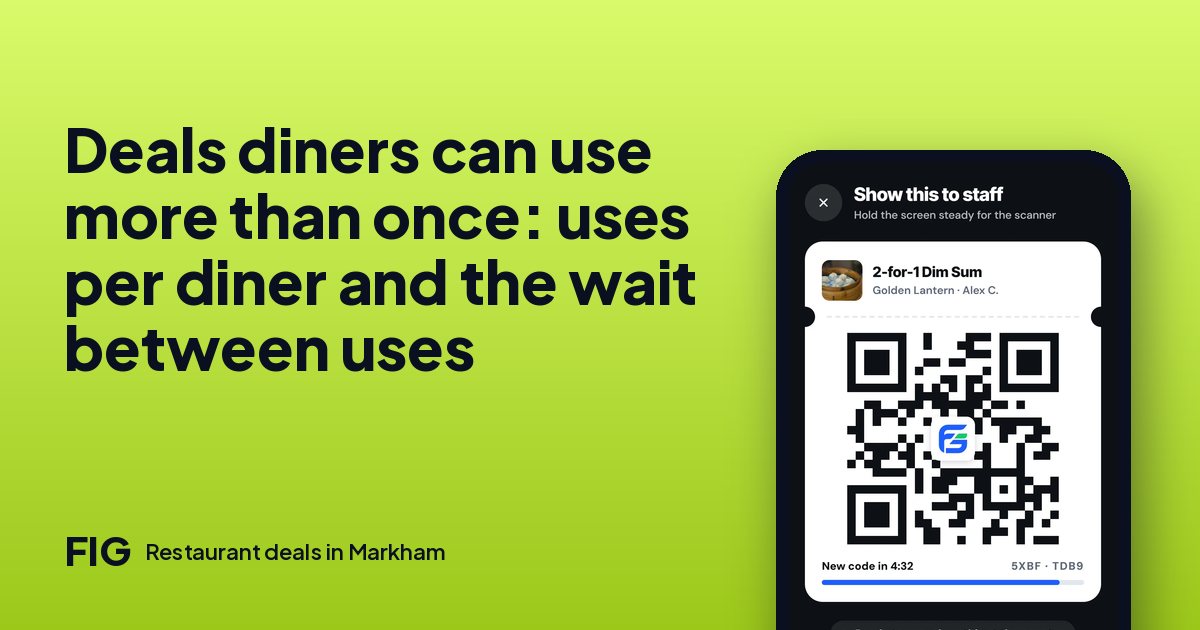
- A deal code works once. If the deal can be used more than once, the diner's screen shows a new code after each scan.
- A diner can claim a deal once a day, so a repeat deal naturally spreads visits over many days.
- Each use needs a fresh scan of the new code, so a repeat deal is a deal you let the same diner come back to.
- Work out the cost per use first. A repeat deal is good when it brings visits you would not have had.
The short answer
When you post a deal on FIG you choose how many times one diner can use it, from 1 up to 20, and you can add a wait between uses. After each scan the diner's screen shows a new code, because a code works once. Use one use for a trial offer, a few uses for a weekday habit, and a wait between uses so the same diner does not use it three times in an afternoon.
What you can set
| Setting | What it does | Good to know |
|---|---|---|
| Uses per diner | How many times one diner can use the deal, up to 20 | Start at 1 for something new |
| Wait between uses | An optional pause before the same diner can use it again | Stops several uses in one visit or one afternoon |
| Live now or scheduled | Starts the deal when you post it, or at a time you choose | Set a lunch deal ahead the evening before |
| Deal type | 2 for 1, percent off, dollar off, or free with a dish | Pick the type that suits your food cost. See the comparison |
How the code behaves
A deal code works once. The diner shows the QR code on their phone, your staff scan it, and that code is spent. If the deal allows more than one use, the diner's screen then shows a new code for the next time. That is why a screenshot is no use: the old code has already worked.
One more rule shapes how often the deal is used: a diner can claim a deal once a day. So even with 20 uses, one diner cannot burn through them in a single day. Your staff still do the same thing every time, which is scan whatever code is on the screen. A ten-minute staff guide shows how.
When a single use is right
- A new dish you want people to try. One use gets the first order. A second visit is up to the dish.
- A big discount. The deeper the cut, the fewer uses you want to give.
- A busy time. A deal that fills a weekday lunch is not a deal you want repeated on a Saturday night.
When more uses make sense
- A small, steady offer. A dollar off a lunch special for the week brings a regular a few times.
- A quiet weekday window. Repeat visits between 2 and 4 pm cost you the least, because the table and the cook were idle.
- A drink or a side. A small offer on an add-on can bring a full order with it.
Pair uses with a wait. A deal that allows 5 uses with a wait between them gives a diner a reason to come back across the week instead of five times on the same day. The slow-hour math goes through how to judge a deal by new and returning diners.
The arithmetic of a repeat deal
Here is an example with round numbers, not a real restaurant. A weekday lunch bowl sells for $14.00, the ingredients cost about 30% of that, and the deal takes $2.00 off. This is a dine-in deal, so FIG takes nothing from the bill.
| Item | Amount |
|---|---|
| Menu price | $14.00 |
| Deal | − $2.00 |
| Diner pays (before HST) | $12.00 |
| Food cost, 30% of $14.00 | − $4.20 |
| Left toward wages, rent and profit | $7.80 |
A diner who uses the deal 5 times leaves you 5 × $7.80 = $39.00. Without the deal, if they would have come twice at full price, you would have had 2 × ($14.00 − $4.20) = $19.60. So the deal is better when it brings at least 2 extra visits. If they would have come all 5 times anyway, the deal cost you 5 × $2.00 = $10.00.
That last line is the risk to keep in mind. A repeat deal gives the discount to regulars as well as to newcomers. It pays off when the quiet window is truly quiet, and your results will tell you whether the same faces keep coming back or new ones do.
Choosing the wait between uses
The wait is optional, and it is the setting that shapes how the deal feels. With no wait, a diner can come back as soon as they have claimed the deal again, which is once a day at most. With a wait, you decide the rhythm: a lunch deal that makes sense once a week behaves differently from a coffee deal that suits most weekdays.
| If your goal is | Try |
|---|---|
| Bring newcomers in once | 1 use per diner |
| Make a weekday lunch a habit | A few uses, with a wait between them |
| Fill a quiet window, nothing more | Several uses, a short wait and tight hours |
These are starting points, not rules. The setting is yours, and the right answer depends on how much the discount costs you per use.
Add-ons carry the margin
Most diners add a drink or a side. Keep the deal on the main dish and sell the add-ons at full price. If the same diner adds a $4.00 drink that costs you $1.00, that is another $3.00 per visit. Over 5 visits, $15.00 more, on top of the $39.00 above.
Reading the results
Your dashboard shows results deal by deal. After two weeks, compare the deal's scans with your quiet hours: did that window fill up, or did the same few diners use up their visits? Your own till tells you the rest. If tables in that window were busier than the week before, keep the deal and consider more uses. If your regulars used it and nobody new did, lower the uses or narrow the hours.
Change one thing at a time, so you know which change made the difference. Write the setting down with the date, so that in a month you remember what you tried.
Before FIG opens
Diners can use FIG from January 1, 2027, and until then they can only join the waitlist at www.figpromo.ca. Restaurants set up first, so you can build your deals now, schedule them, and have your repeat deal waiting on day one. Pick the quietest weekday window you have and start with a small offer. Our seven ways to fill slow hours has more ideas.
Questions
How many times can a diner use one deal?
You choose, from 1 up to 20 uses per diner, with an optional wait between uses.
Does the QR code change?
A deal code works once. If the deal can be used more than once, the diner's screen shows a new code after each scan.
Can a diner use a deal several times in a day?
No. A diner can claim a deal once a day.
Can I schedule a repeat deal?
Yes. A deal can be live now or scheduled, with uses per diner and a wait between uses.
Do restaurants see a diner's phone number?
No. Restaurants never see diners' phone numbers.
Do I need a different code for each use?
No. Your staff just scan whatever code the diner shows. The diner's screen creates the new code.
Does a dine-in repeat deal cost anything to FIG?
No. FIG takes no commission on the bill and nothing on dine-in.